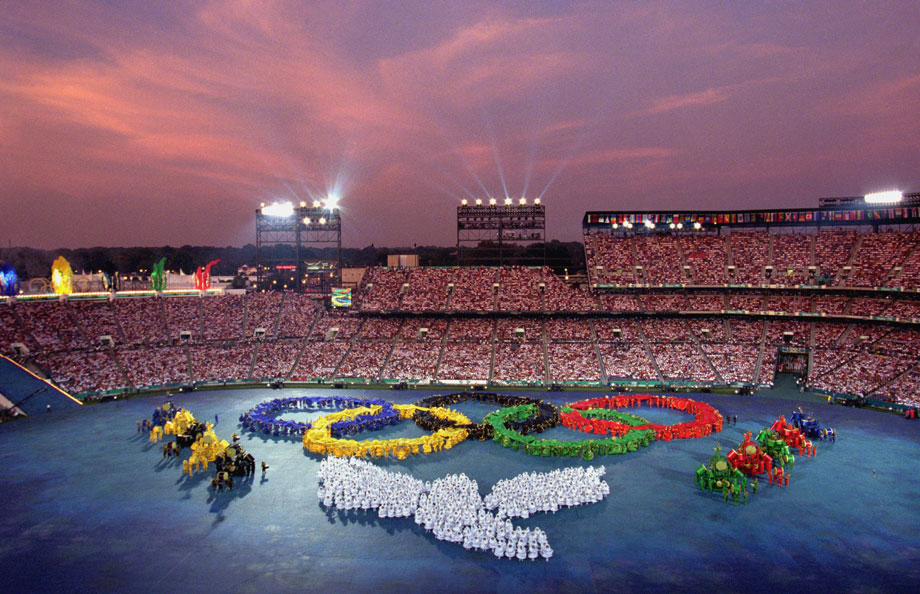
Vectour (then operating as Haslam Custom Coach) provided transportation services for 80% of all corporate sponsors during the 1996 Summer Olympic Games in Atlanta — the company's first Olympic Games engagement and a foundational milestone in its now 30-plus year history of major event transportation.
Project delivery.
Challenge. Approach. Results.
01 / CHALLENGE
Objectives
The primary goal for the 1996 Atlanta Summer Olympics was to ensure efficient, reliable, and safe transportation for all event participants, including athletes, officials, VIPs, media, and spectators. Given the scale of the event and the number of venues spread across the city, it was crucial to develop a comprehensive transportation plan that could handle the high demand and logistical complexity.
The challenge
High Demand and Volume
Transporting thousands of participants to multiple venues across Atlanta required meticulous planning and coordination.
Read moreRead less
Security Concerns
Ensuring the safety and security of high-profile attendees and managing road closures and restricted access areas.
Traffic Management
Navigating and mitigating the impact of increased traffic congestion in a major metropolitan area.
Coordination with Multiple Stakeholders
Collaborating with local, state, and federal agencies, including law enforcement and public transit authorities.
02 / APPROACH
Our approach
Comprehensive Planning:
Conducted thorough assessments and developed detailed transportation plans over a two-year planning phase.
Read moreRead less
Utilized advanced modeling to predict travel demand and optimize routes and schedules.
Fleet Management:
Deployed a fleet of 254 motor coaches to meet the transportation needs of the event.
Established a central command center to monitor and manage the fleet efficiently.
Staffing and Training:
Recruited and trained over 300 drivers, ensuring they were well-prepared for the operational challenges.
Established a planning team of 9 experts and an operational staff of 25 to oversee day-to-day transport activities.
Security and Coordination:
Worked closely with law enforcement agencies to develop and implement security measures, including police escorts and road closures.
Coordinated with various stakeholders to align transport operations with overall event logistics and security protocols.
Communication Systems:
Implemented robust communication systems to facilitate seamless coordination between dispatchers, drivers, and event organizers.
Provided real-time updates and information to participants through on-site information points and communication channels.
03 / RESULTS
The results
Efficient Transport Operations
Successfully transported thousands of athletes, officials, and spectators to and from event venues with minimal delays and disruptions.
High Participant Satisfaction
Received positive feedback from participants and stakeholders for the reliability and efficiency of the transportation services.
Read moreRead less
Enhanced Safety and Security
Implemented robust security measures that ensured the safety of all participants throughout the event.
Legacy of Excellence
Set a high standard for transportation planning and execution for future Olympic Games and other large-scale events.